

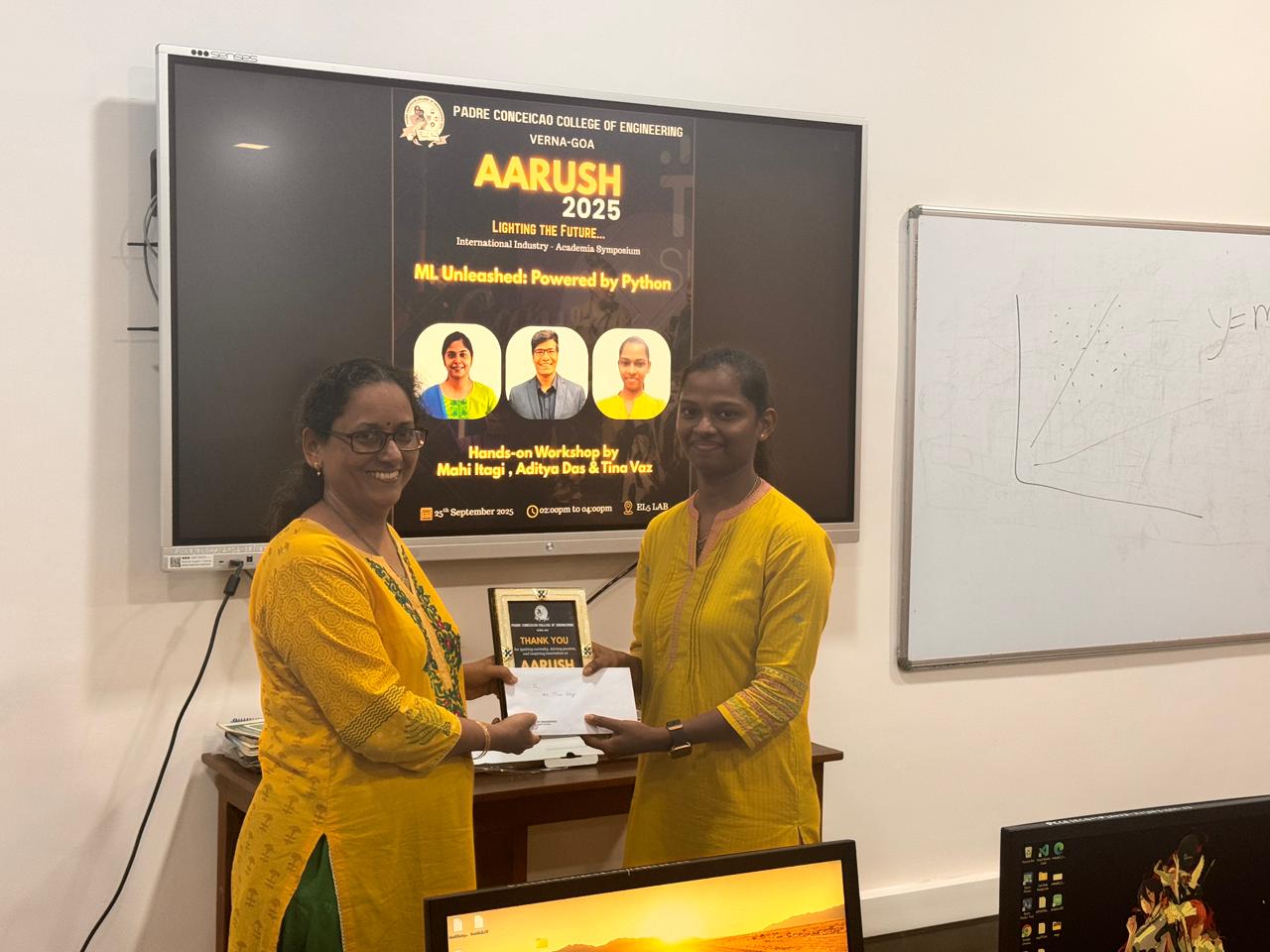
Hands-On Workshop on ML Unleashed: Powered By Python
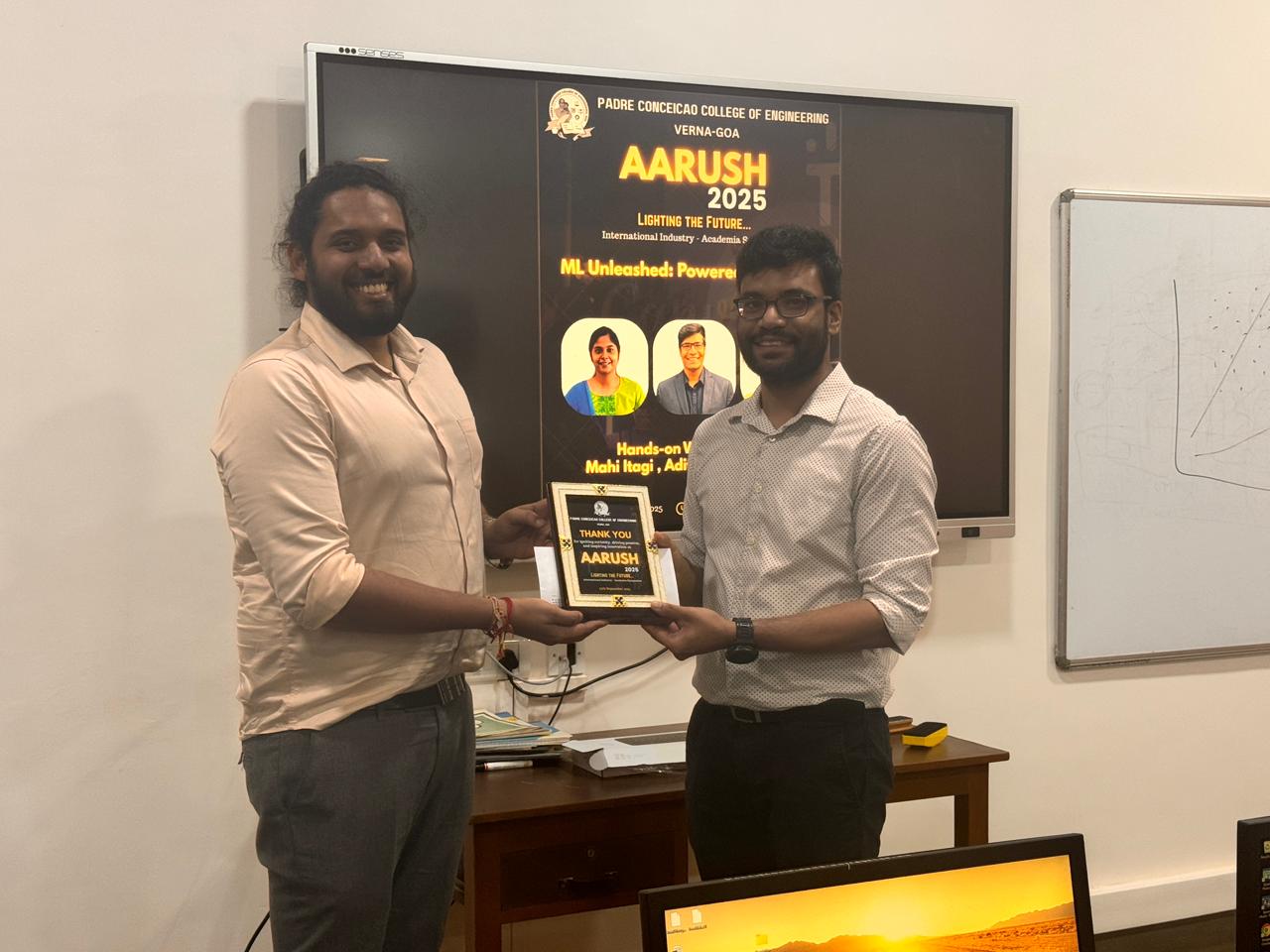
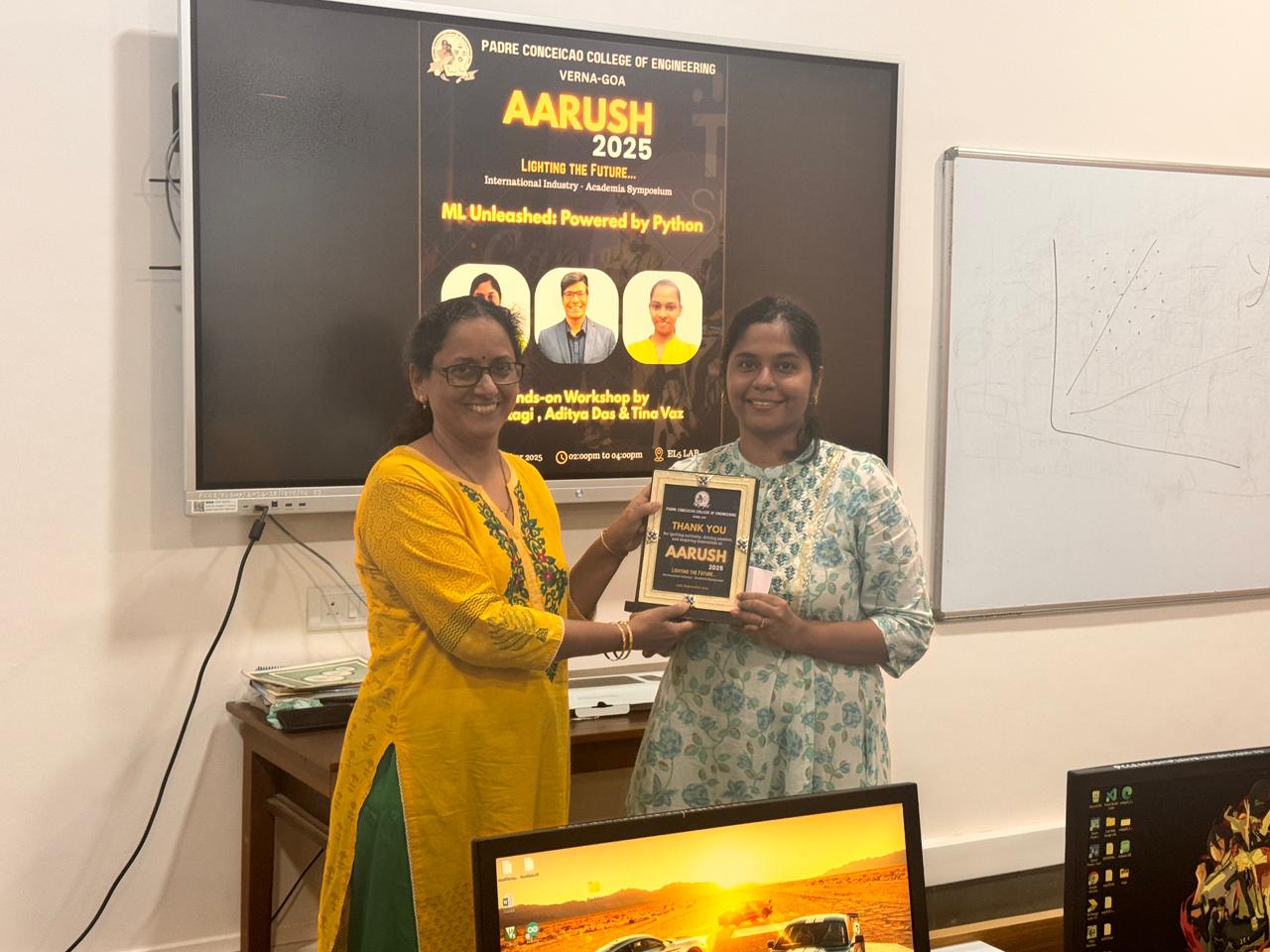
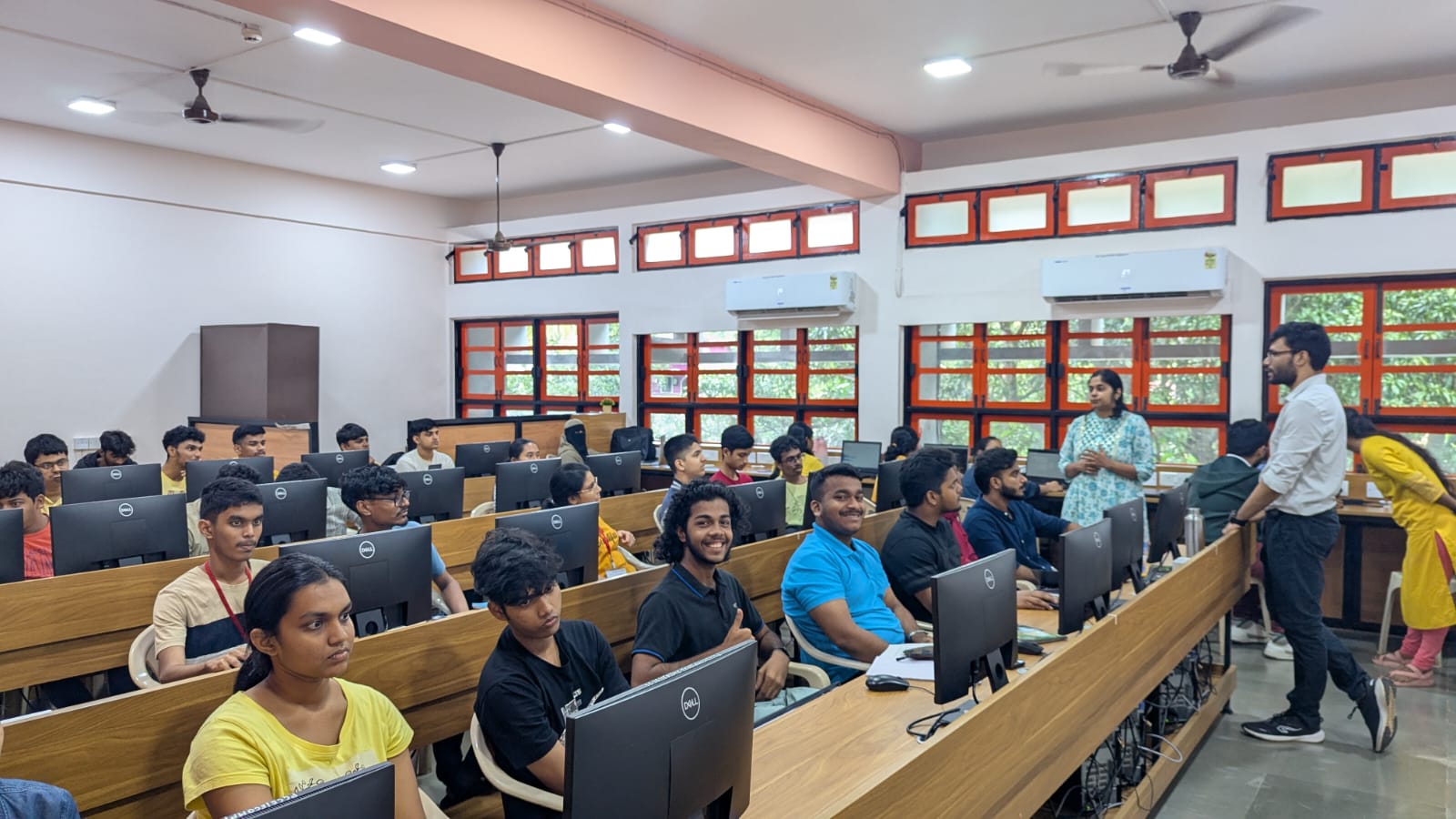
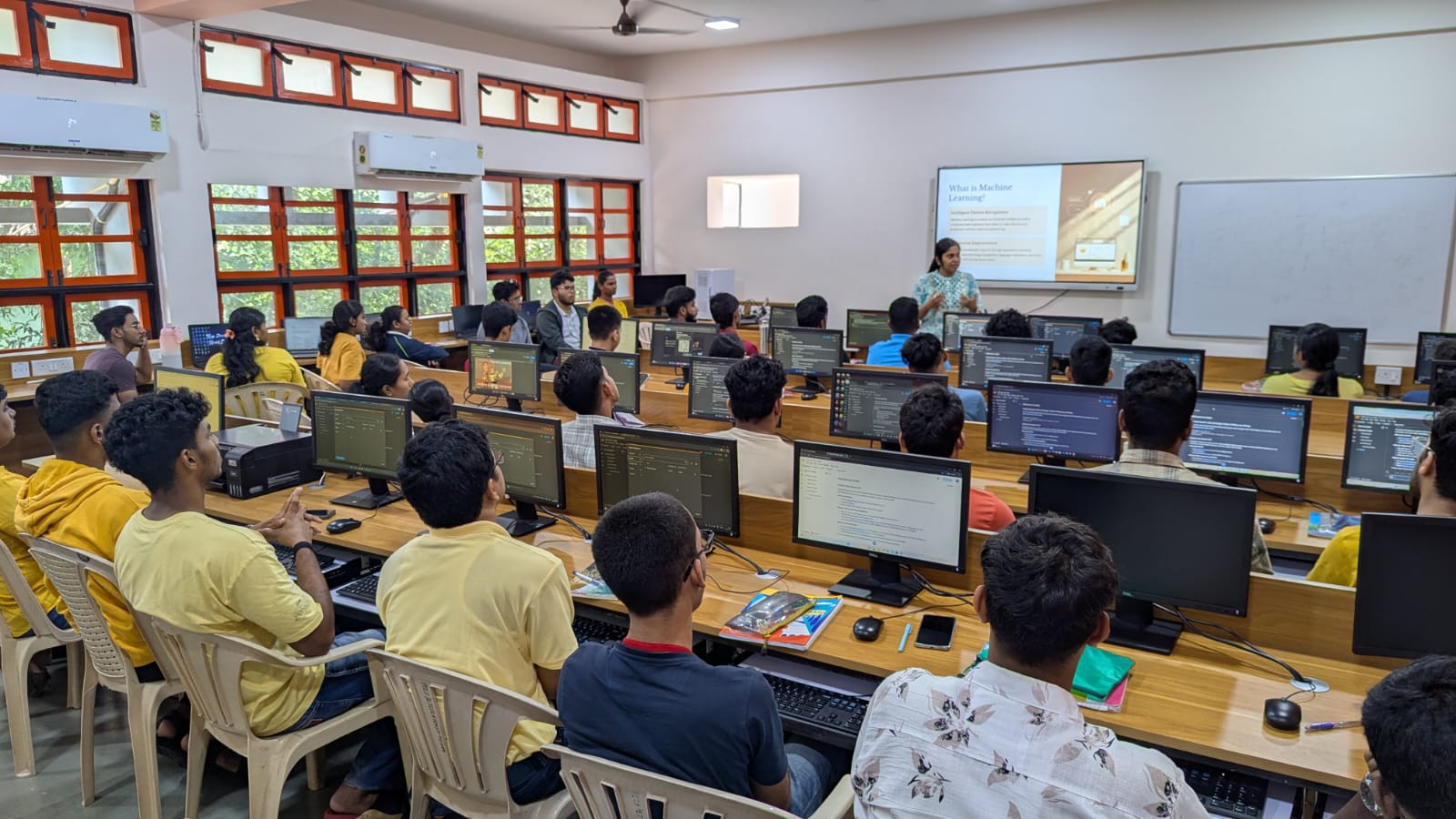
The primary objective of the workshop was to familiarize participants with the foundational concepts of Machine Learning (ML) and to provide hands-on experience using Python and Google Colab. The session emphasized understanding datasets, data preprocessing, visualization, and building basic predictive models.
Workshop Agenda
- Introduction to Machine Learning and its applications
- Overview of Python environment in Google Colab.
- Loading and exploring datasets using Pandas
- Data visualization with Matplotlib and Seaborn
- Preprocessing techniques and feature scaling
- Learning how ML algorithms work to train the model.
- Building and evaluating a simple machine-learning model with Scikit-learn
- Interactive Q&A and troubleshooting code issues and doubts.
- Demonstration of Google’s Teachable Machine for interactive image and sound classification
Key Outcomes
Participants gained exposure to the end-to-end workflow of a machine-learning project. By the end of the session, they were able to:
- Understanding, How ML factors into modern day AI applications?
- The difference between Supervised and Unsupervised learning
- Understanding the types of supervised learning and their use.
- Learning about the Logistic and Linear regression and their use.
- Learning about decision tree classifiers and their use.
- Understand the role of data preprocessing in model performance.
- Implement basic models such as linear regression or classification on the Titanic dataset to predict the likelihood of survival of any given passenger.
- Using logistic regression and decision tree classifiers to predict exam results based on hours spent in studying and hours spent in sleeping by a given student.
- Visualize data and interpret simple model outputs using Matplotlib and Seaborn.
- Operate within the Google Colab environment for rapid prototyping.
- Observe how Teachable Machine can rapidly prototype classification models and understand its underlying workflow.
- Using Teachable Machine to classify pictures and distinguish between pictures. Eg: Cats or Dogs, Cars or Bikes.
Conclusion
The workshop successfully introduced core concepts of machine learning to the attendees, bridging theoretical knowledge with practical coding experience. The inclusion of the Teachable Machine demonstration provided an accessible understanding of real-world classification models. The event fostered curiosity and encouraged participants to further explore advanced topics in data science and machine learning.